01
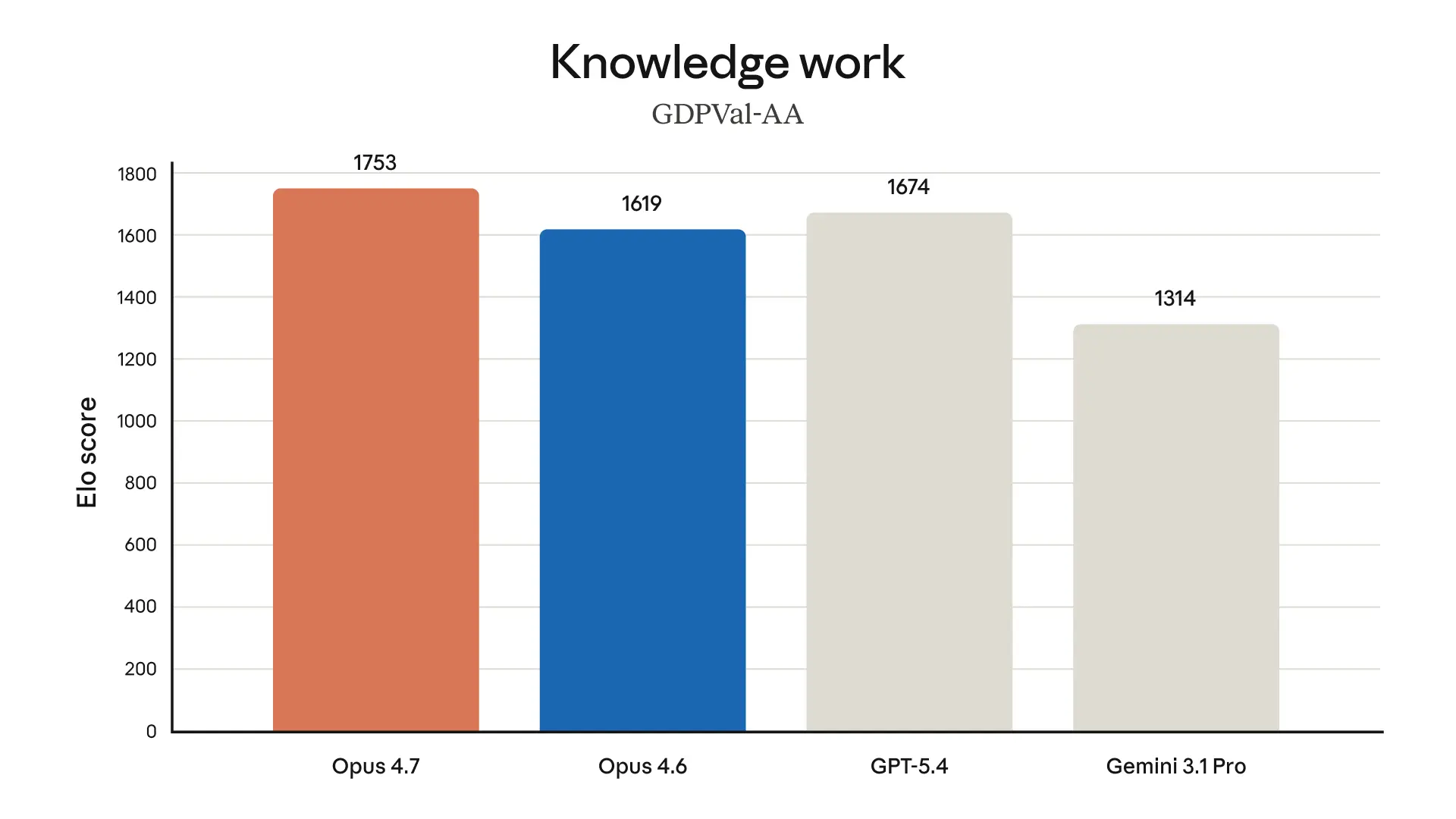
Knowledge work = drafting your memo.
Every classification ends with a one-page audit-ready memo — with reasoning, citations, and a named reviewer. That’s knowledge work. Opus 4.7 leads.

Accuracy
Two things have to be true for compliance work to be useful: the model has to be smart enough to read regulations correctly, and the workflow has to make every answer checkable. This page covers both — with the actual numbers from independent benchmarks and a plain-English walkthrough of how ExChek keeps Claude honest.
First — the substrate
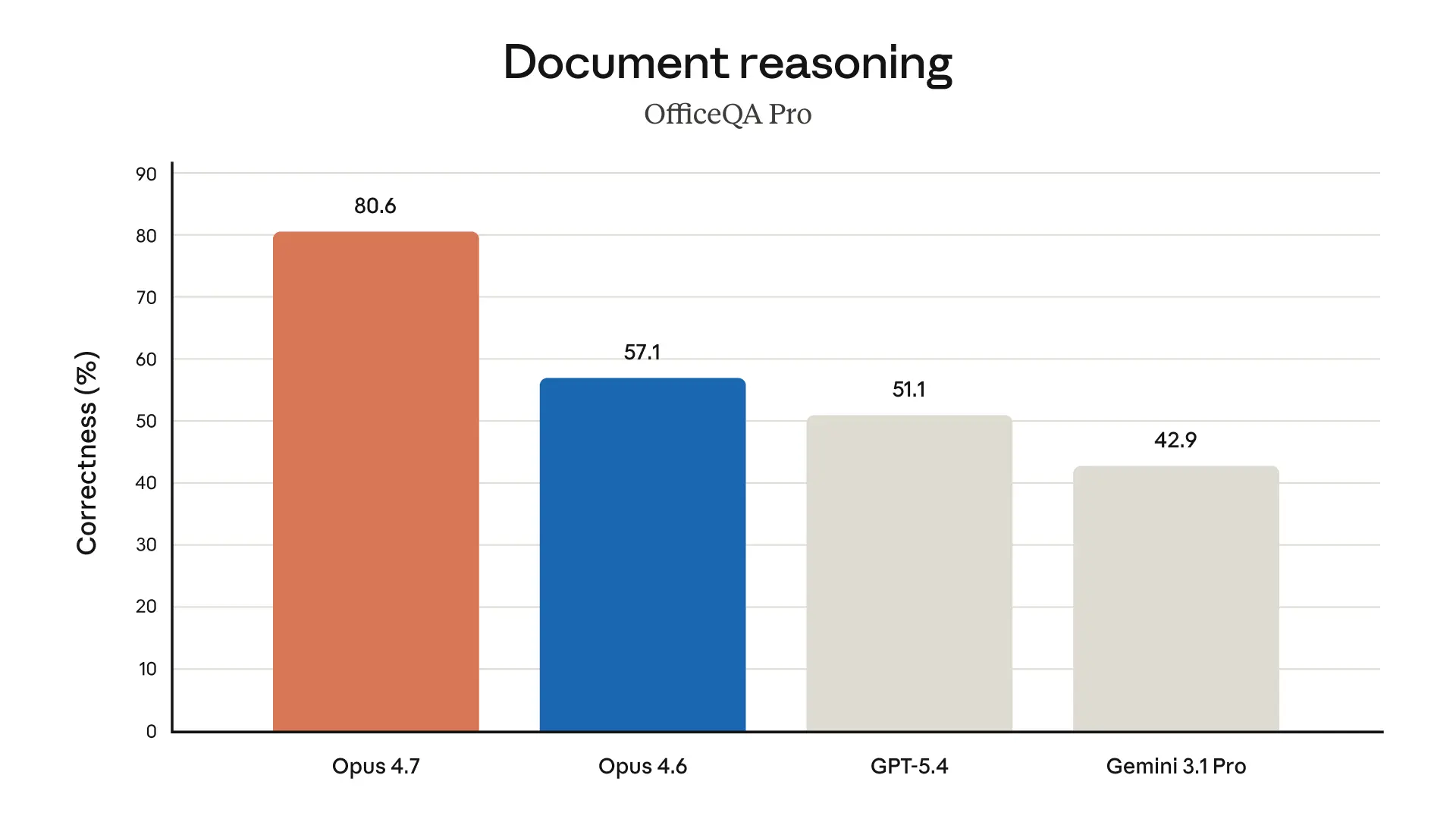
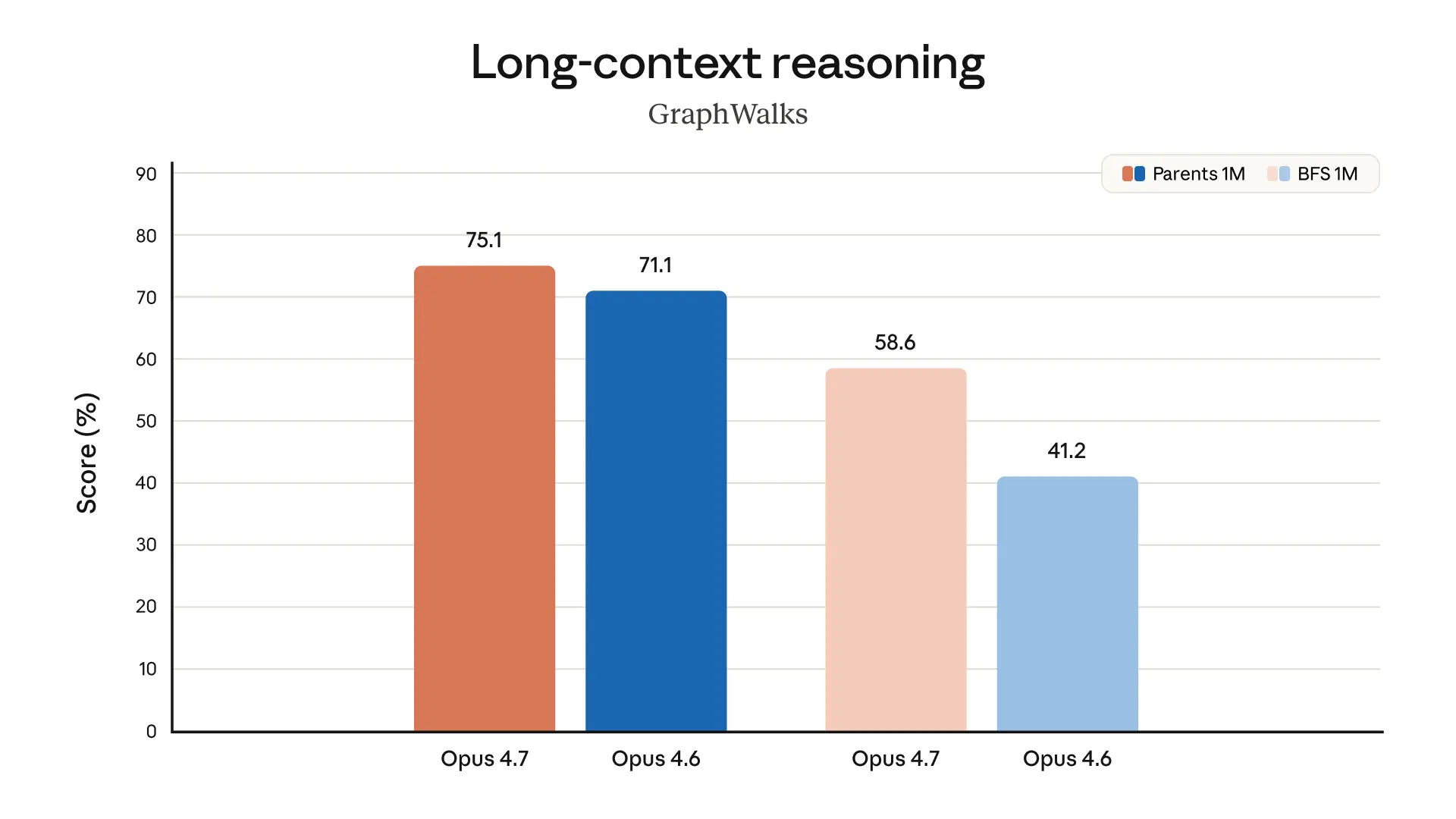
Three benchmarks below test exactly the kind of work an export-compliance agent has to do every day: real knowledge work (drafting, summarizing, decisions), reading long technical documents, and reasoning across hundreds of pages of context. We didn’t pick these — Anthropic published them.
Why this matters for export compliance
01
Every classification ends with a one-page audit-ready memo — with reasoning, citations, and a named reviewer. That’s knowledge work. Opus 4.7 leads.
02
A datasheet is a business document. Pulling the encryption strength, the country of origin, the technical parameters — that’s OfficeQA-style work. Opus 4.7 wins by 23+ points.
03
15 CFR Part 774 alone is hundreds of pages. The Commerce Country Chart adds more. ExChek loads all of it and Claude has to reason across the whole stack. Long-context is the foundation.
The full picture
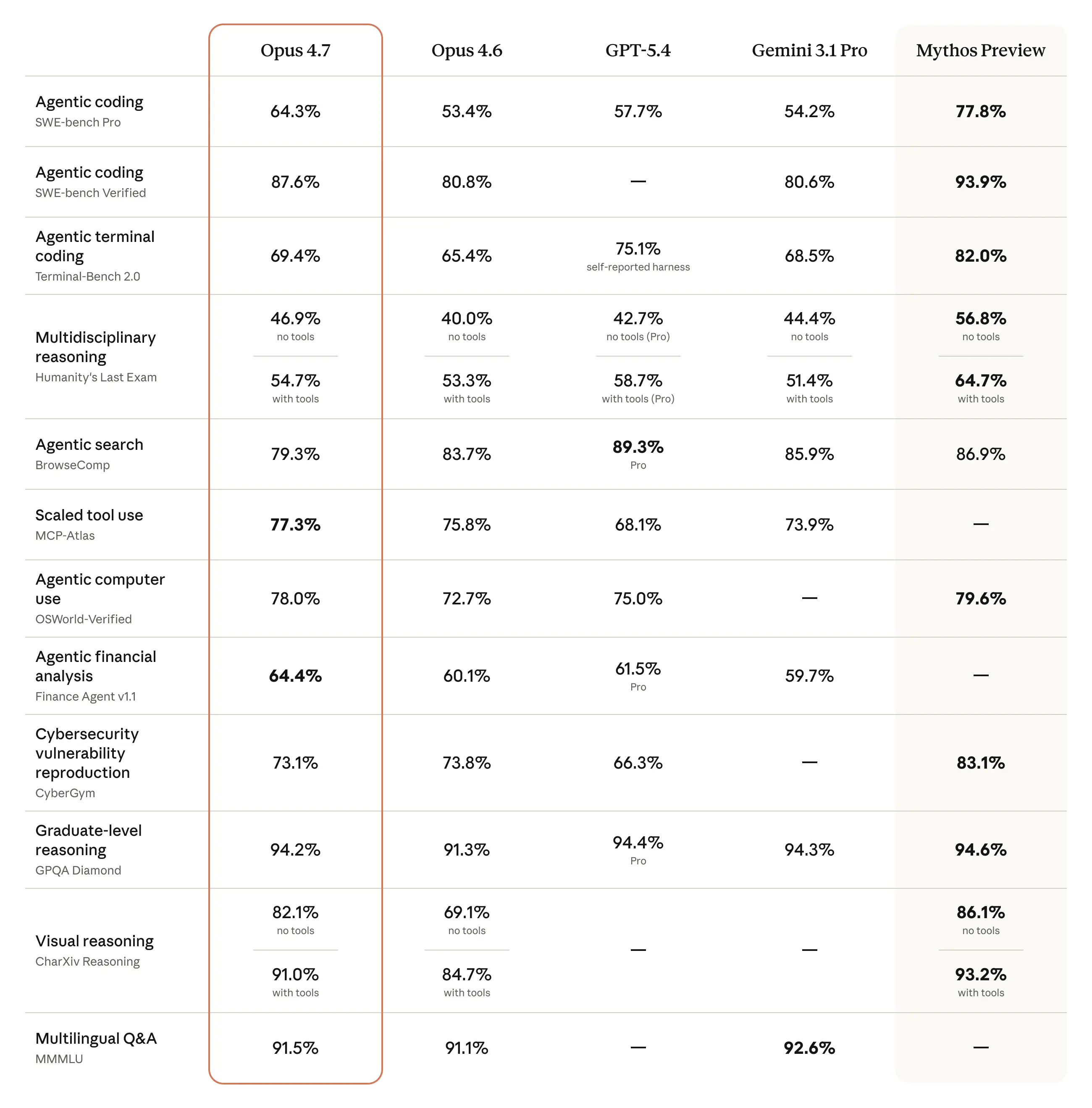
Anthropic published the full comparison — agentic coding, tool use, computer use, financial analysis, multilingual Q&A, and more. ExChek runs on the highlighted column.
ExChek’s accuracy layer
Even the best frontier model can be wrong. ExChek wraps Claude with four layers that force every output to be defensible.
Layer 1
We don’t rely on the model’s training cutoff. ExChek pulls the current text of 15 CFR 774, 22 CFR 121, and the Commerce Country Chart from the official eCFR API on every classification.
Layer 2
Every memo includes the exact CFR section, paragraph, and date. If we say a part is EAR99, we show you the rule and why nothing else applied.
Layer 3
ExChek never auto-files anything. You read the determination, the reasoning, and the citations — and you sign off. Your name goes on the memo, not Claude’s.
Layer 4
Every decision is hashed and chained. If anything is altered after the fact, the chain breaks. Tamper-evident by default — the kind of trail BIS expects on a five-year recordkeeping requirement.
Want to dig deeper?
Why Frontier Models?
Agents, tools, connectors, memory, skills — in plain English, with ExChek workflows as the example.
Read the pageSecurity & Safety
Enterprise-grade trust posture. Why Claude is safer than the laptop most of us work on every day.
Read the pageUnderstanding costs
Real numbers. Free engine, your existing Claude subscription, and the API rates if you go that route.
Read the pageDownload the plugin, run it on a part you actually ship, and read the memo. Then check it against the CFR yourself. That’s the only accuracy test that matters.